

StrikePlagiarism checks similarity and AI-generated text before you accept it
A flagged passage arrives with a named source
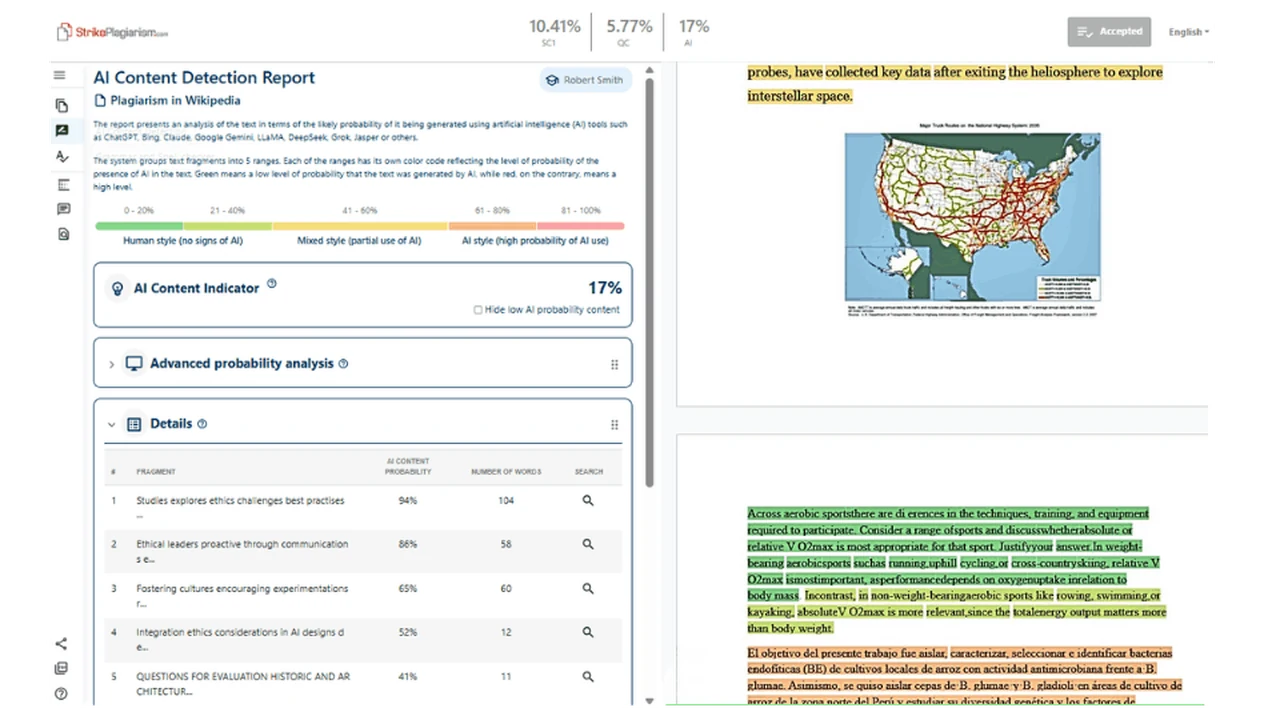
StrikePlagiarism is an academic integrity platform. It compares a submission against scientific journals, publisher databases, institutional repositories, government archives and the open web, then reports how much of the text matches, where it came from, and which passages read as machine-written.
Global tools. Local licensing and support.
- One subscriptionPlaced and renewed with a Philippine company
- Access set upLogins and links arranged with your library
- Program scopingCoverage matched to the programs and offices you run
- Local supportQuestions reach a team in the Philippines
CE-Logic licenses the tool locally and sets it up with your library, so your users reach the content it holds, your librarians put it in front of the right people, and the institution gets sources it can stand behind.
What goes into one subscription
What StrikePlagiarism is
- Similarity reports
- AI-text detection
- LMS integration
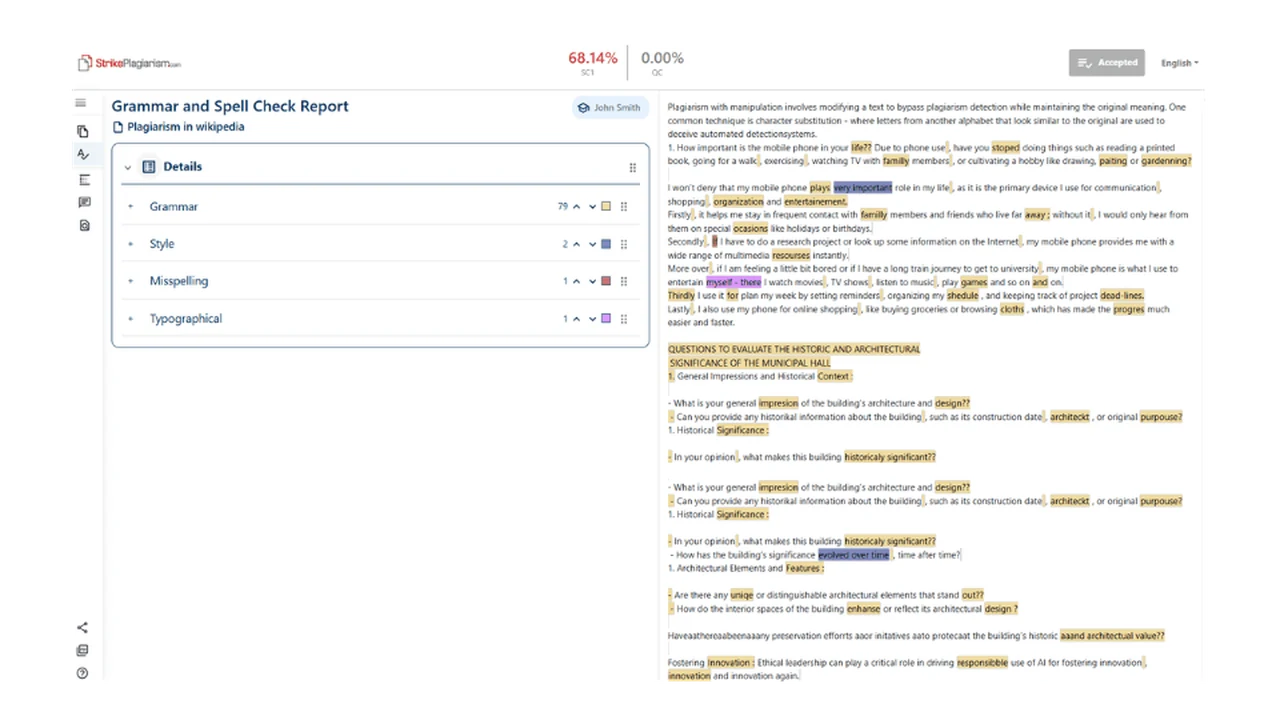
StrikePlagiarism is a screening platform built for the moment before a grade, a defence or a publication decision. A file goes in and an interactive similarity report comes back: the share of matched text, the source behind each match, the matched passages themselves, paraphrasing detection, citation tracking and alerts where the text looks manipulated. The report is built so a reviewer can see the basis for a result instead of trusting a single number.
Where two submissions under the same assignment carry the same text, the cross-check finds it, even when neither document has been added to the database yet.
Who it is for
The academic integrity office, the thesis or graduate studies committee, the journal editor checking submissions before peer review, and the librarian who runs the institutional repository. It also suits a research office that reviews faculty manuscripts before submission, and a school that has to show an external reviewer how it handles originality.
For the reviewer, the useful part is that a flagged passage arrives with a named source. That turns a conversation about cheating into a conversation about citation, which is the one an integrity office can actually hold with a student or an author.
What is inside
- Similarity reports
- AI-text detection
- LMS integration
- Similarity reports with the source behind each match and the matched text shown
- Cross-check inside an assignment, so two submissions are compared against each other as well as against the databases
- AI-generated content detection, with flagged fragments scored for human review
- Paraphrasing detection, citation tracking and alerts on text manipulation
- Assignments, so submissions are collected and checked in one workflow with deadlines
- Integration through an API and LTI, so the check sits inside the learning management system your institution already runs, with OJS support for journal submissions
- Cloud hosting on EU-based servers, or installation on your own servers when the archive has to stay on local infrastructure
Getting access in the Philippines
CE-Logic brings StrikePlagiarism to Philippine institutions and works through the subscription with your integrity office and your IT team, including where the archive sits and who on your staff administers it. If the same problem reaches the journals your faculty publish in, Emerald Publishing covers that side of the collection, and ScienceDirect is where your authors look for the literature they cite. Both have a page in the same portfolio, CE-Logic Research and Information Solutions.
How CE-Logic Implements StrikePlagiarism: The Navigate Framework
A license is not adoption. CE-Logic uses the Navigate framework to make sure the resource gets adopted, reaches the right people, and stays tied to institutional goals.
01
Discover
We look at what your programs, research offices and students need to reach, and how your library handles access today, before a subscription is placed.
02
Align
We match the coverage to the programs, research areas or agency mandates it has to serve, so the subscription has a reason to exist.
03
Activate
We set up authentication and library links before launch, and start with the librarians and faculty who will use it first.
04
Sustain
Ongoing support from CE-Logic after launch, with usage reviewed against the programs the subscription was bought for, so renewal is a decision on evidence.
Navigate is the C&E ALS framework for turning a licensed resource into research your institution actually uses. Read about C&E ALS Navigate.
Questions libraries ask before licensing StrikePlagiarism
Can we evaluate StrikePlagiarism before we subscribe?
Contact CE-Logic to arrange a free trial or a demo, and bring the papers or the workflow you want tested, such as a thesis round or a journal submission. The trial is set up with your integrity office and IT team so reviewers judge it on their own cases.
How do we request a quote for StrikePlagiarism?
Send the request through ceals.ph/contact-us/ with your current process attached: how papers arrive, who reviews them, and whether the archive has to stay on your own servers. Navigate carries it from scoping through setup and support with your integrity office and IT team.
Does StrikePlagiarism connect to our learning management system?
Yes. It connects through LTI 1.3 and a REST API, with documented integrations for Moodle, Canvas, Blackboard, Brightspace and Schoology, plus single sign-on. A submission made in the LMS is checked inside the assignment module, so the report reaches the faculty member who set the work.
What sources does StrikePlagiarism check a paper against?
It checks against RefBooks, its own scientific database; your institution's repository; databases shared by other subscribing institutions; publisher and government archives; and the open internet. Translated text is checked too, so a passage lifted from another language can still be matched against the same sources.
Can faculty see similarity reports for a whole class at once?
Yes, at the assignment level. Papers submitted to one assignment are collected in one place, each with its own similarity report, and cross-check compares the whole set against itself so shared text between classmates shows up. The result is per paper, not one class score.
Does StrikePlagiarism detect AI-written text, or only copied text?
Both, reported separately. Similarity checking covers copied and paraphrased text against the databases. AI detection scores passages as machine-written and flags the high-risk fragments for a reviewer to read, so neither result is a verdict on its own.
Scope it with your library
Bring your current screening process to the conversation: Ask about StrikePlagiarism access.
Ask about StrikePlagiarism